
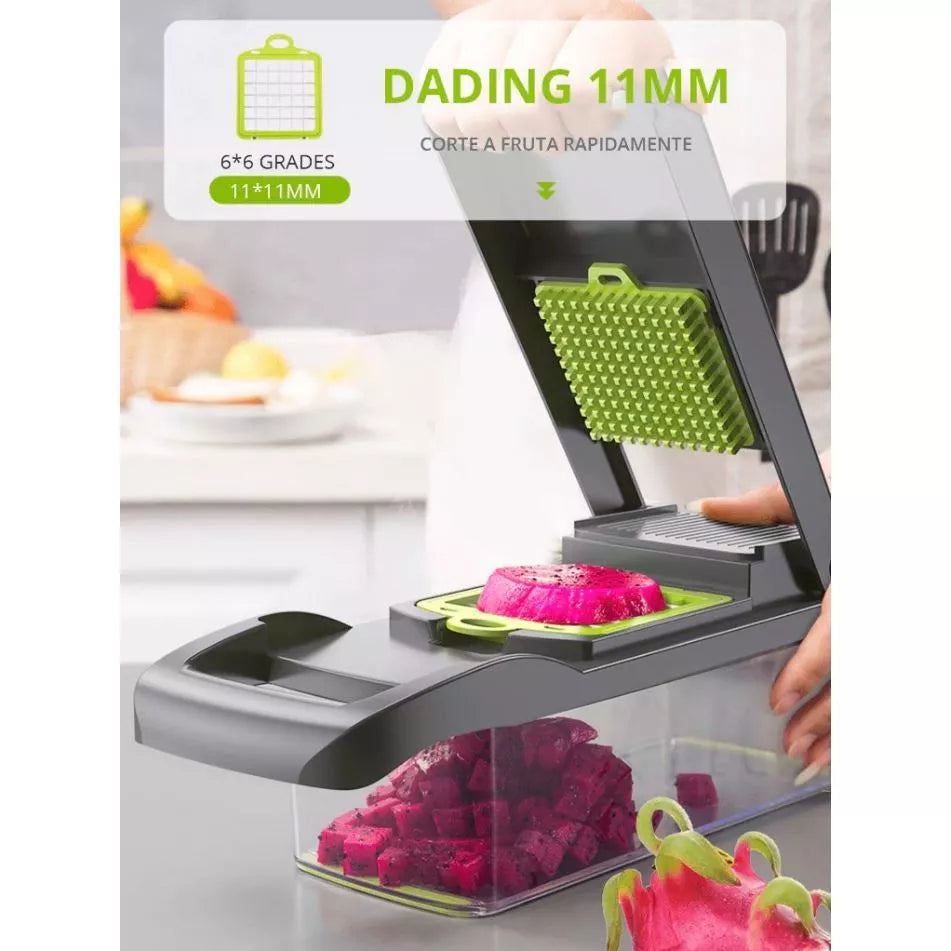
Choosing the best products to make your home more practical doesn't mean buying everything that appears as “smart” or modern. The secret lies in identifying your needs, comparing features, considering the total cost, and choosing solutions that really save time, space, effort, or energy.
A more practical home doesn't need to be larger, more expensive, or completely automated. Often, How to Choose the Best Products to Make Your Home More Practical can make a significant difference in your routine simply by eliminating small repetitive tasks.
A smart outlet can make controlling an appliance easier. An organizer can free up space. A robot vacuum can reduce the time spent cleaning. Proper lighting can make certain rooms more functional.
With so many options available, however, an important question arises: how do you choose the best products to make your home more practical?
In this guide, you will discover how to evaluate home products, which features really matter, when it is worth investing in technology, and how to avoid purchases that seem interesting but end up forgotten in a drawer.
Why Choosing the Right Products Can Transform Your Routine?
Before buying any product, think about the tasks that bother you most in your daily life.
Maybe it is organizing small objects. Maybe it is cleaning the floor, controlling appliances, saving space, or simply finding what you need quickly.
The best purchase is not necessarily the most sophisticated product. It is the one that solves a specific problem in a simple way.
Practicality means saving time and effort
Imagine someone who spends a few minutes every day looking for objects scattered around the house. A proper organization system can reduce this small repetitive difficulty.
Now imagine someone who needs to clean the floor frequently. For this person, a robot vacuum can offer more value than a smart lighting device.
This demonstrates an important principle:
The best product for your home is the one that improves a real part of your routine.
How to Identify What Your Home Really Needs
Before researching products, do a quick assessment of your home.
Start with the most repetitive tasks
For a few days, observe activities such as:
- Cleaning;
- Organization;
- Doing laundry;
- Food preparation;
- Lighting control;
- Security;
- Storage;
- Temperature control;
- Energy saving;
- Pet care;
- Cable and electronics organization.
Write down the tasks you repeat most frequently.
Then, ask:
“Is there any product that could make this task faster, simpler, or automatic?”
This question is more useful than simply starting to search for “modern home products.”
Distinguish need from desire
A product can be interesting without being necessary.
For example, someone may like the idea of controlling the lights with their phone. But if this does not solve any relevant problem, it may be better to first invest in something that really makes their routine easier.
A good purchase should offer at least one of these benefits:
- Save time
- Reduce effort
- Improve organization
- Increase security
- Make better use of space
- Help control consumption
- Increase comfort
- Simplify a repetitive task
What to Consider Before Buying Home Products
After identifying your needs, it is time to evaluate the products.
Do not look only at the price, appearance, or number of reviews.
1. Functionality
The first question should be: does the product really do what it promises?
Read the description carefully and look for information about:
- Materials;
- Dimensions;
- Capacity;
- Compatibility;
- Installation method;
- Power source;
- Usage limitations;
- Warranty.
The more clearly you understand the product, the lower the chance of buying something unsuitable.
2. Size and available space
This detail seems simple, but it is often ignored.
An organizer may look perfect in a photo and not fit in the cabinet.
An appliance may have excellent features but take up too much space.
Before buying, measure the area where the product will be used.
Consider:
- Height;
- Width;
- Depth;
- Space needed for opening;
- Distance from outlets;
- Area needed for maintenance.
3. Ease of use
A product made to make life easier should not create a complicated routine.
Ask:
“Could anyone in my home use this product easily?”
The smaller the learning curve, the greater the likelihood that the product will actually be used.
How to Choose Smart Products for a More Practical Home
Smart products can offer automation and remote control, but that does not mean that every connected device is a good purchase.
Currently, the category includes light bulbs, outlets, cameras, locks, thermostats, speakers, robot vacuums, water sensors, and many other devices. Consumer Reports maintains a specific area of testing and guidance for various categories of smart products.
Check compatibility
Before buying a smart device, check if it works with:
- Your smartphone;
- Your Wi-Fi network;
- The operating system you use;
- Compatible voice assistants;
- Other devices in your home;
- The automation standard or platform you use.
Buying devices that do not work well together can turn a connected home into a collection of different apps.
Think about the ecosystem
If you plan to buy several smart products over time, consider choosing devices that can work within a compatible ecosystem.
This can make the following easier:
- Automation;
- Centralized control;
- Configuration;
- Creating routines;
- Managing the devices.
Internal link suggestion: use the anchor text “smart products to make your daily routine at home easier” to connect this article to your previous content about home technology.
Security and Privacy Are Also Part of Practicality
A smart home can be convenient, but connected devices also require attention to digital security.
Cameras, doorbells, locks, and other devices may handle information you would not want to expose.
Consumer Reports highlights the importance of evaluating security and privacy when choosing connected products and maintains specific tests related to the cybersecurity of these devices.
Before buying a connected device
Check:
- If the manufacturer offers software updates;
- How the information is stored;
- If there is two-factor authentication;
- What data the app collects;
- If certain features require a subscription;
- How long the product receives support.
Cameras and security devices deserve special attention
A security camera should not be evaluated solely by image quality.
Also consider:
- Local or cloud storage;
- Privacy policy;
- Access control;
- Account security;
- Notifications;
- Sharing options.
Alt text suggestion: “smart camera to increase home practicality and security”.
How to Choose Products That Save Energy
Practicality and efficiency can go hand in hand.
The International Energy Agency reports that appliances account for a significant portion of building electricity demand and highlights the importance of more efficient equipment.
The IEA energy efficiency database, updated in June 2026, also gathers information on residential consumption and different categories of household appliances.
Do Not Look Only at the Purchase Price
A cheap product may end up costing more over time if it consumes much more energy or requires frequent maintenance.
When comparing appliances, consider:
Initial price + consumption + maintenance + accessories + possible subscriptions.
This is the real cost of use.
Look for Efficiency Information
Depending on the country and product category, look for official energy efficiency labels and certifications.
In the American market, for example, consumers can consult resources from the Department of Energy related to energy savings and efficiency programs.
External link suggestion: use the anchor text “official tips for saving energy at home” to direct the reader to the Energy Saver from the U.S. Department of Energy.
Products to Better Organize Your Home
Not every practical solution needs to be technological.
Some of the most useful products for an organized home are extremely simple.
Drawer organizers
Dividers and compartments can help separate small objects and prevent everything from getting mixed up.
They are especially useful for:
- Cutlery;
- Accessories;
- Office supplies;
- Makeup;
- Small tools;
- Cables.
Vertical organizers
When horizontal space is limited, think vertically.
Shelves, supports, and hanging organizers can make use of areas that normally go unused.
Labeled boxes and containers
For objects used infrequently, labeled boxes can make finding them much faster.
A simple rule works well:
If you cannot find something quickly, you probably need to improve the organization of that space.
How to Choose Products to Make Cleaning Easier
Cleaning is one of the areas where small improvements can make a big impact.
Prioritize Products That Eliminate Repetitive Tasks
Instead of simply searching for the “best cleaning products,” identify which step takes up the most of your time.
For example:
- Lots of hair on the floor → suitable vacuum cleaner;
- Frequent dust → quick cleaning tools;
- Lack of space → compact storage solutions;
- Difficulty reaching certain areas → extension accessories;
- Frequent floor cleaning → consider automation.
Robot vacuums: when do they make sense?
Robot vacuums can be especially interesting for people who want to reduce the frequency of manual floor cleaning.
But consider:
- Type of floor;
- Size of the area;
- Presence of rugs;
- Pets;
- Obstacles;
- Furniture height;
- Need for emptying;
- Replacement parts.
Do not buy just because a model has dozens of features.
Choose the features that will really be used.
How to Compare Price and Value for Money
The cheapest product is not always the most economical.
Similarly, the most expensive product is not necessarily the best.
Use the value-for-money ratio
Before buying, ask three questions:
1. How much will I pay?
Consider the initial price.
2. How much will I spend afterward?
Include:
- Batteries;
- Filters;
- Refills;
- Parts;
- Maintenance;
- Subscriptions.
3. How much value does it deliver?
Think about:
- Hours saved;
- Reduced work;
- Comfort;
- Security;
- Durability;
- Organization.
This analysis helps avoid decisions based solely on price.
Online Reviews: How to Separate Useful Opinions from Superficial Comments
Reviews from other buyers can be very helpful, but they need to be interpreted correctly.
Don't Look Only at the Average Rating
A product with a 4.7 rating may have thousands of reviews and still have specific issues.
Look for comments that mention:
- Use after several months;
- Durability;
- Ease of installation;
- Customer service;
- Quality of materials;
- Actual performance;
- Recurring problems.
Also look for negative reviews to discover the product's limitations.
Compare Different Sources
In addition to customer reviews, look for:
- Independent tests;
- Manuals;
- Manufacturer specifications;
- Comparisons;
- Official agencies;
- Specialized websites.
Consumer Reports, for example, publishes tests and guides for various categories of smart and home products.
Multifunctional Products Can Save Space
When space is limited, products that serve more than one function can be appealing.
But Multifunctional Doesn't Automatically Mean Better
A product with ten functions may perform all of them poorly.
In some cases, two specialized products may offer better performance.
Ask yourself:
"Would I Really Use All These Functions?"
If the answer is no, look for a simpler solution.
How to Choose Practical Products for Small Apartments
Those who live in apartments or compact homes need to think differently.
Prioritize Compact Products
Look for solutions that:
- Take up little space;
- Can Be Easily Stored;
- Have More Than One Function;
- Can Be Folded or Disassembled;
- Make Use of Vertical Space.
Avoid Buying Before Measuring
This is an essential rule for small spaces.
Measure cabinets, countertops, hallways, and storage areas before buying.
An excellent product that does not fit in the available space is no longer a practical solution.
How to Create a More Practical Home on a Budget
You Don't Need to Remodel the Entire House.
Start with small changes.
Low-Cost Strategy
First: remove items that are not used.
Second: organize the most problematic spaces.
Third: identify repetitive tasks.
Fourth: look for products specifically designed for those problems.
Fifth: automate only when automation really offers an advantage.
This approach helps prevent practicality from turning into a series of impulsive purchases.
Common Mistakes When Buying Home Products
Buying Only Based on Appearance
A beautiful product may not be functional.
Buying Based on the Number of Features
More functions do not necessarily mean more value.
Ignoring Dimensions
Always check measurements before buying.
Forgetting Future Costs
Filters, refills, batteries, and subscriptions can significantly increase the cost.
Not Checking Compatibility
This is especially important for smart products.
Buying Several Products at Once
It's better to test one solution and see if it really works for your routine before expanding.
A Simple Checklist Before Buying
Before finalizing any purchase, ask these questions:
- What problem does this product solve?
- How often will I use it?
- Do I have enough space for it?
- Is it compatible with what I already have?
- How much does it cost to maintain?
- Does it come with a warranty?
- Is it easy to clean or maintain?
- Are replacement parts available?
- Will the extra features really be useful?
- Would I buy this product if it weren't on sale?
If you answer yes to the main questions, you're probably closer to making a conscious purchase.
The Best Practical Home Is One That Is Tailored to Your Routine
There is no universal list of the best home products.
A large family may need different solutions from someone who lives alone.
Those who work from home may value organization and comfort. Those with pets may prioritize cleaning. Those who travel frequently may place more importance on security and remote monitoring.
Therefore, the choice should start with your routine, not the product.
Technology can help, but it doesn't need to dominate the home.
Conclusion: Choose Products That Really Make Your Life Easier
Knowing how to choose the best products to make your home more practical is primarily a matter of understanding your needs.
Before buying, analyze the problem, compare features, check measurements, research reviews, consider the total cost, and, in the case of smart products, check compatibility, privacy, and security.
The best products are not necessarily the most expensive or high-tech. They are the ones you use regularly and that can save time, reduce effort, improve organization, or increase comfort.
Start small. First, solve the biggest problem in your routine, and then move on to other areas.
Which household chore would you like to make easier? Leave a comment and share your experience. And if you like discovering practical solutions for everyday life, keep following the blog to find new ideas for a more organized, comfortable, and smart home.
Article Summary
To choose good products for your home:
- Identify real problems before buying.
- Prioritize functionality and ease of use.
- Check dimensions and available space.
- Evaluate quality and durability.
- Compare the total cost, not just the price.
- Check compatibility in smart products.
- Consider privacy and digital security.
- Analyze energy consumption and maintenance.
- Read reviews from different sources.
- Avoid buying products just because they are in fashion.


Leave a comment
This site is protected by hCaptcha and the hCaptcha Privacy Policy and Terms of Service apply.